
Bangladesh
PAGE RESULTS (152 RESULTS)
See you, Letter: When Alphabets become Language
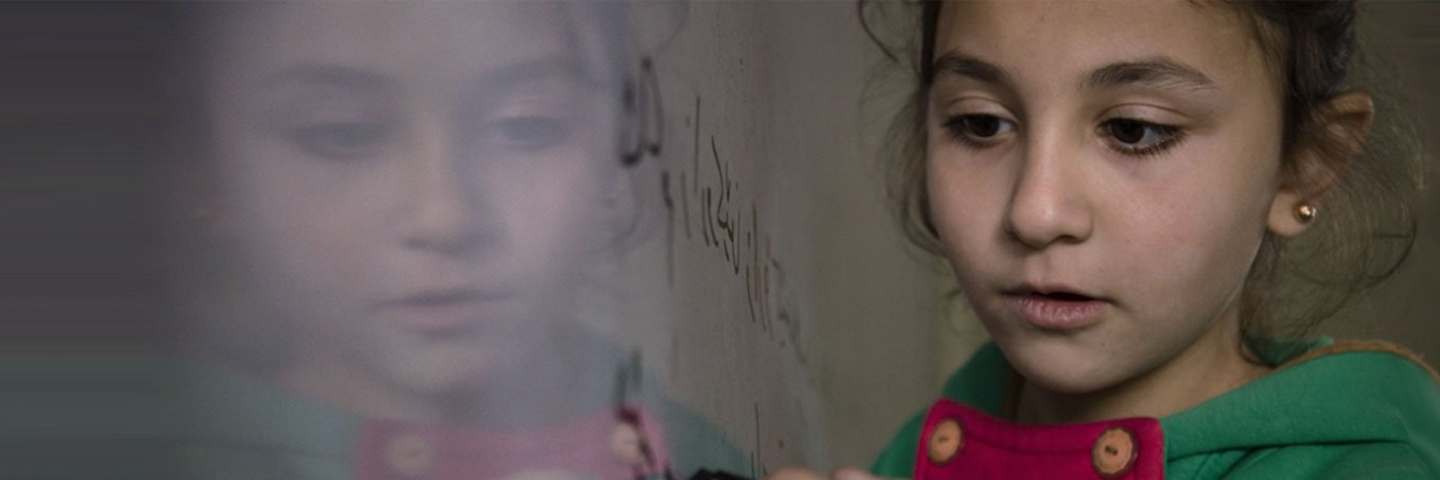
When Shihab (10) noticed that his friends were reading sentences from their notebooks, he felt they were decoding a code that he had never learned to identify. All he saw were symbols that didn’t make much sense: “A looked like tents, B was a pair of eyes, and C just looked like an open mouth. I wasn’t seeing them as part of a larger word or sentence.” His inability to make sense of the words stifled him as his peers read out loud.
Rohingya Camps: One in Three Refugees Face ‘Crisis’ Hunger as Conditions for Children Worsen
Nine years after hundreds of thousands of Rohingya fled attacks and violence in Myanmar, an entire generation of Rohingya children has grown up in displacement, and many children know nothing but life inside the Cox’s Bazar refugee camps in southeast Bangladesh.
Herd-earned Success- Popi is Taking Over the Family Farm
Popi Akhter (23) and Sumi are both early risers. “I have taken care of Sumi since she was a calf. Her calm and friendly approach is the best way to start the day,” elaborates Popi. She has been waking up to cattle calls since she was a child - “The cow shed is part of our house. We try our best in a small space, keeping the cattle safe and inland.” For the budding cattle entrepreneur, she dreams of taking the farm a bit further. It’s more than raising cattle for Popi; she is boosting the business standard. “I’ve been a helping hand with my father’s cattle since I was little. Now I want to make investments, so it grows.”
BANGLADESH: Deadly landslide kills seven more children in Rohingya camps
The landslide came after at least eight people – including five children – died in flooding and landslides on 6 July in Cox’s Bazar, the world’s largest refugee settlement, that is home to more than one million Rohingya refugees, most of them women and children.
First baby born by C-section at new Save the Children hospital in world's largest refugee camp
“We opened this hospital to bring specialised care closer to those who need it the most and to ensure mothers feel safe and supported. Hopefully this will be the first of many successful deliveries that reinforce our commitment to strengthen healthcare for mothers and babies in Cox’s Bazar.”
Children Should Never Be a Part of the Workforce
With a population of about 170 million, Bangladesh faces serious challenges in protecting its children, who make up roughly 40–45% of the population. Despite ratifying the Convention on the Rights of the Child and enacting the Children’s Act 2013, children remain highly vulnerable. The 2025 Multiple Indicator Cluster Survey (MICS) shows that 86% of children aged 1–14 have experienced violent discipline in the past month. Child marriage is also widespread: 47% of women aged 20–24 married before 18, and 13% before 15, while overall 56% of women aged 18–49 was married before turning 18.
From Bangladesh to Baku: A Young Activist Calls for Child-Friendly Cities at the World Urban Forum
At just 17, Imtiaz from Bangladesh emerged as a powerful young voice for urban children at the World Urban Forum (WUF13) in Baku, Azerbaijan. A child rights advocate and member of the National Children’s Task Force, Imtiaz delivered a powerful message: a safe home is the foundation upon which all other children's rights are built.
Bangladesh: Families urged to vaccinate children as number of suspected measles deaths exceeds 400
The measles outbreak is affecting all eight divisions in Bangladesh, prompting an emergency vaccination campaign across the country. In the last month, nearly 18 million children have been reached with at least one dose of the vaccine, according to government data.
Rohingya boat departures nearly double this year as aid cuts and insecurity force families out of camps
The worrying increase comes ahead of the region’s annual monsoon season, which brings heavy rains and winds, and puts refugees fleeing by boat at heightened risk of capsize on choppy seas.
NEWS QUOTE: BANGLADESH FACES WORST MEASLES OUTBREAK IN A DECADE
The country’s capital Dhaka, Cox’s Bazar - home to the world’s largest refugee camp - and other dense urban slum areas are seeing particularly high caseloads, with infants under nine months most affected.
